
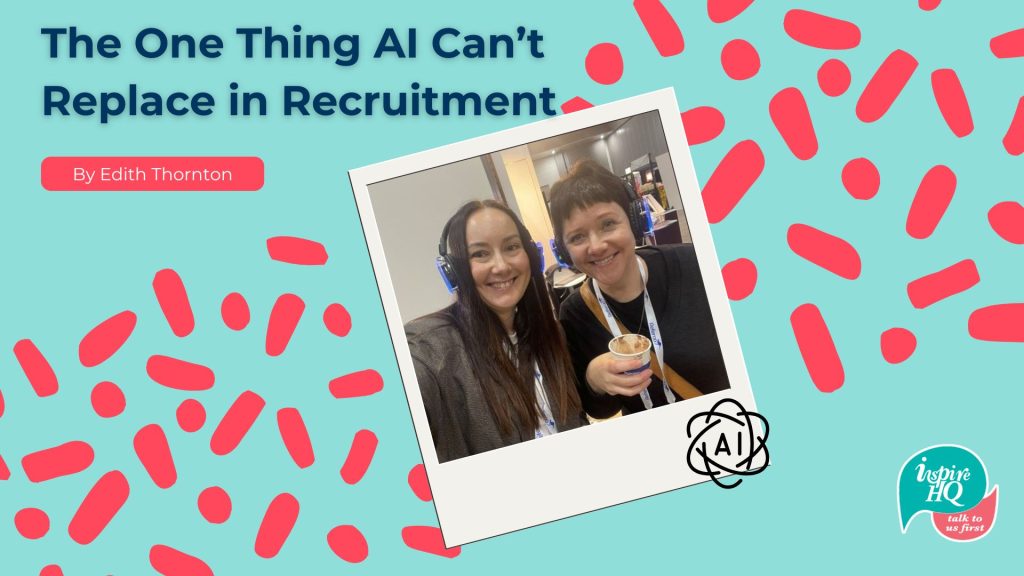
Last week, Kara and I had the opportunity to attend the Talent X Recruitment Expo hosted by the RSCA at the Convention Centre in Melbourne. It was an early and chilly start to the day, but after reviewing the packed schedule for the day we were looking forward to a full day of learning and upskilling. The day and event itself is not only a gathering of recruitment professionals, but also a vibrant space for professional development and networking. The RSCA delivered – the speakers were engaging, short sharp sessions, renowned industry professionals invited and plenty of vendors with display stands (we even got served up some great food!).
One thing you can count on when you fill a room with recruiters, it will be loud… stories will be swapped, new connections will be made and there will be plenty of conversations in the coffee queue!
There is real value in getting out of your usual environment. Being in a different space stimulates creativity and innovation, exposing yourself to new ideas which in turn can help you approach your work with a fresh mindset. Industry events like Talent X feature workshops and presentations by industry leaders that are tailored to provide insights into new trends, tools and best practices to assist us helping you stay updated on the latest market trades, demands and changes.
The reoccurring focus of the day was AI and the human element in the recruitment space. However, the clear theme of the day that Kara and I took and discussed on the train ride home: AI will not be able to replace the human connection in recruitment and how critical that is. Technology has a fundamental limitation when it comes to what we do: working with people.
A skilled recruiter goes beyond scanning a resume. We read the room, picking up on body language, tone, hesitation and enthusiasm and ask the questions that uncover what a candidate truly wants, not just what they have written down, building a richer, more honest picture of who someone really is and where they genuinely want to go.
That depth of understanding is what allows us to do something a tool or algorithm simply cannot: determine a person’s real aspirations to the opportunity and tell that story compellingly. We don’t just match skills to job descriptions; we align ambitions to futures. At the heart of this is empathy, emotional intelligence and the ability to build genuine relationships. It shapes how we source talent, how we engage candidates, and how we assess fit in ways that go far beyond a skills checklist.
Talent X was a timely reminder that no matter how the tools evolve, the human element in recruitment isn’t just still relevant, it’s more important than ever in the race for AI dominance.
Five Ways Recruiters Can Protect the Human Element
- Spend more time on discovery conversations, not just vacancy briefings
Move beyond skills and experience. Ask candidates and clients about motivators, frustrations, values and career aspirations. The quality of your placement decisions improves when you understand the “why” behind the move. - Use AI to automate administration, not relationships
AI can assist with note taking, screening questions and scheduling, but candidates still remember how a recruiter made them feel. Protect the parts of the process that require empathy, trust and judgement. - Create more human moments in the recruitment process
Whether it’s a pre-interview call, checking in after an interview, or helping a candidate navigate uncertainty, small moments of genuine connection are often what candidates remember most. - Don’t lose the art of professional judgement
AI can identify keywords, patterns and matches, but recruitment decisions still require human judgement. Great recruiters know when a candidate may interview better than their resume reads, when a career gap isn’t a red flag, or when a hiring manager’s brief needs to be challenged. The ability to apply context, intuition and market insight is still one of the most valuable skills in recruitment.
It was fortunate that we had travelled to Melbourne together, because the train ride home gave us the time to properly unpack the day, sharing what had resonated and what had not. That felt like proof of the point. A day spent with people who care about the same things we do. Between conversations about the sessions, the speakers and the people we’d spoken to throughout the day, it was a quiet confirmation of why we do what we do.
As recruitment continues to evolve, the agencies and internal talent teams that stand out won’t simply be the ones with the fastest technology or most automated systems. They’ll be the ones who know how to combine innovation with genuine human connection.
While AI may improve efficiency, recruitment has always been and will always remain a people business.